At last, it was here. The 4th and final SAMO of my senior year. I had absolutely no idea what I wanted to do for it, so to help myself brainstorm, I began to reflect on my past SAMO’s and what really intrigued me.
I remembered that my very first SAMO, Glimmer of Hope, was incredibly eye-opening and interesting to me. It was a Q and A with students and alum from Marjory Stoneman Douglas High School in Parkland, Florida. Then, it came to me: why not go full circle and wrap up my SAMO experience with another Parkland opportunity.
After some research and investigating, I found a documentary showing at Regina Dominican High School in Wilmette, Illinois called After Parkland. It was filmed and created by an alum of Regina Dominican who now lives in Parkland with her family, so she was showing a premiere of it before it premiered to the public. Tickets were $5 on the school website, and I went to go see it with Alana Gertz who I also went to the Parkland Q and A with (full circle again!).
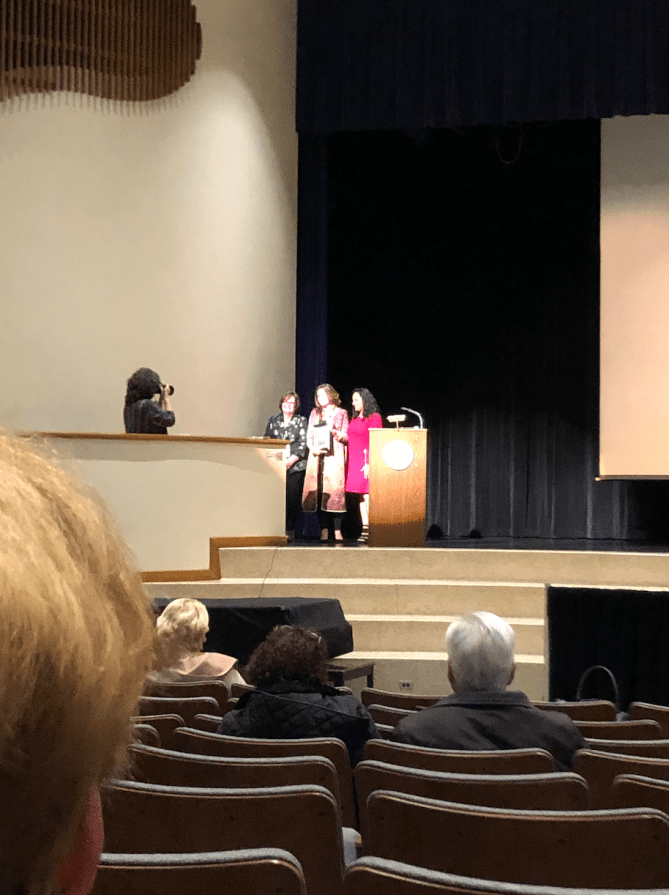
The creator of After Parkland posing with some faculty from Regina Dominican
At the very beginning of the documentary, the town of Parkland was being introduced as a very family-oriented, friendly, community-based town. However, something stuck out for me as they continued to describe it. Someone described Parkland as a “bubble”, which is also what some of the students said about it at the Q and A earlier in the year.
They mentioned that it was a bubble in terms of the way that Parkland holds you in and the bubble really doesn’t pop until you physically leave the town. That description immediately reminded me of Northbrook. Northbrook is a bubble whether we accept/realize it or not.
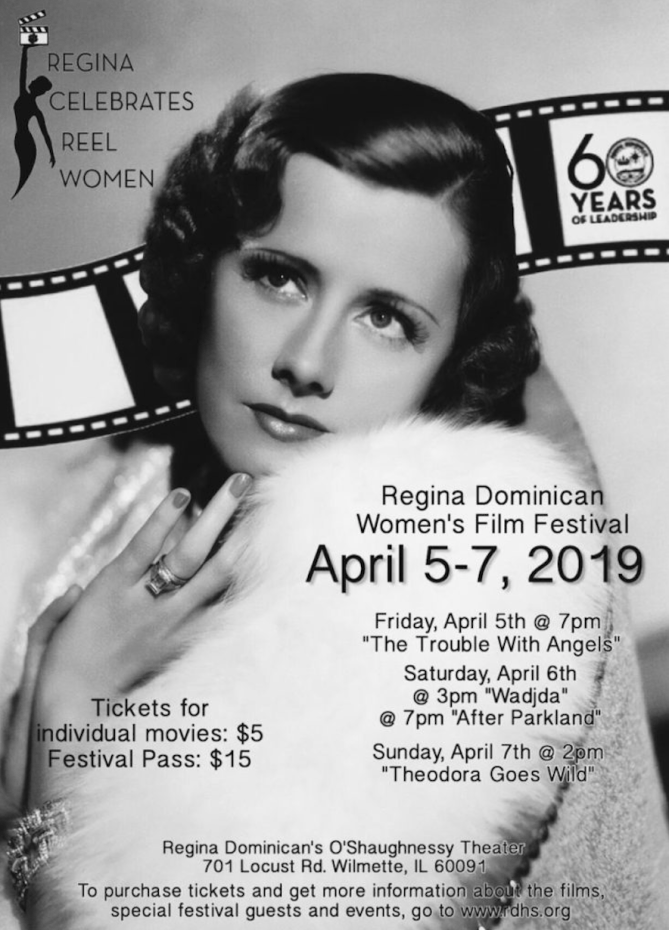
The program of the Film Festival at Regina Dominican
As the documentary went on, the viewers were introduced to Nava Lundy, a painter/artist who lives in Parkland. She had decided to dedicate her time to painting portraits of the victims of the Stoneman Douglas shooting and delivering them to their families. She wanted each family to have a memento of their son/daughter as a reminder of their bravery and shortly-lived yet inspirational life.
One line that she said that I immediately typed into my notes after hearing it was, “Art should be for anything else”.
It was really eye-opening, raw and real to hear her say this line. She literally had to put her career on hold to paint something that she never EVER should’ve had to paint. If tragedies like these didn’t happen, their families would still get to see their kids in real life instead of only being able to remember them through pictures and paintings.
When Lundy began to deliver these portraits to the homes of the families, it quickly became a very emotional experience for her.
She has a toddler-aged son and when she returned home from the deliveries, she said through tears, “We are going to make sure that schools are safe when it’s time for you to go to school”.
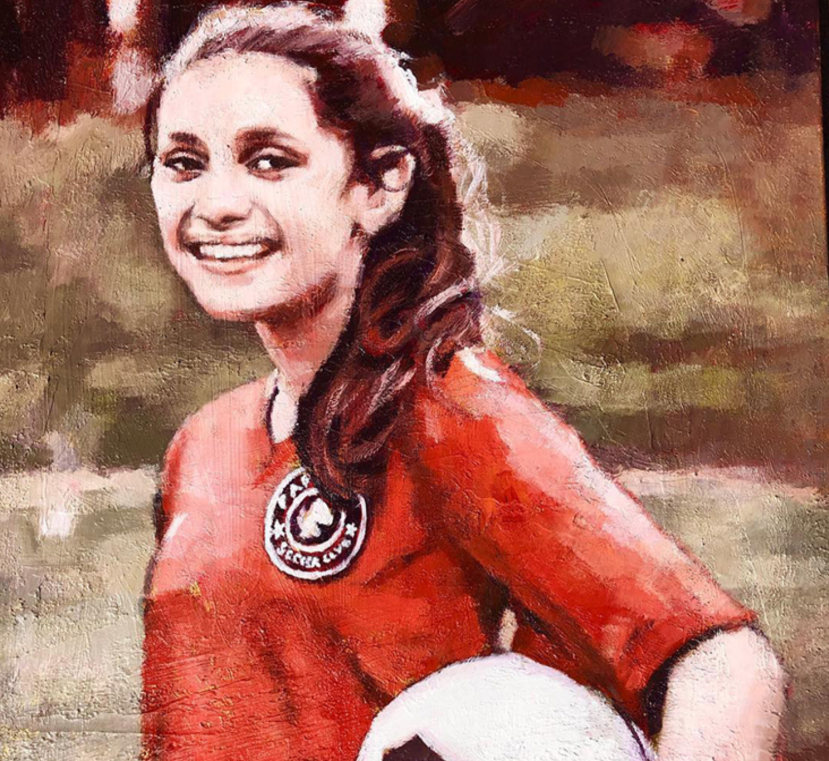
- A portrait of victim Alyssa Alhadeff drawn by Nava Lundy
The fact that this is something that we, as a society, even have to worry about breaks my heart into a million pieces. We should not have to worry about our children being unsafe in their educational facilities, yet unfortunately, this is something we have to worry about every single day now.
Living in a suburb of Chicago, every other news story is a shooting usually occurring on the south side. Even before school shootings began, the word “shooting” had been in my vocabulary much earlier than it should be for anybody.
(PICTURE)
“96 people die of gun violence every day. However, it’s not talked about until it happens to white kids in a white community”
This stuck out to me because it perfectly explains what it’s like living in Chicago and not having shootings being recognized because they’re in a heavily populated black people community and the victims are black people.
Finally, the documentary began to introduce the main story that showcased the lives of the Oliver family following the tragic death of their brave son, Joaquin Oliver who passed away in the Stoneman Douglas shooting on February 14th, 2018.
Joaquin’s sister, Andrea, said that she can’t afford to mope. She knew that Joaquin’s life ended much too soon, simply by his acts of bravery and putting his life on the line to save his friends lives at the time of the shooting. That being said, she wanted to live her life to the fullest because Joaquin unfortunately never got the chance to do so.
While I was watching this part of the documentary, in particular, I began to wonder why Joaquin was the only victim included along with his family. At the end of the documentary, we were invited to stay for a Q and A with the creator and someone actually asked why the Oliver’s were the only ones who participated.
In response to this, the creator then said that all of the other families weren’t ready and were still grieving.
Immediately, this reminded me of The Pain Scale by Eula Biss. Biss writes, “The pain scale measures only the intensity of pain, not the duration. This may be its greatest flaw. A measure of pain, I believe, requires at least two dimensions. The suffering of Hell is terrifying not because of any specific torture, but because it is eternal,” (19).
This explains the situation perfectly. It literally says that it measures the intensity, but now how long the intensity lasts. Joaquin’s family was ready to get out there and remember his life. Other families aren’t quite ready because their pain scale is still heightened and they still need time to grieve.
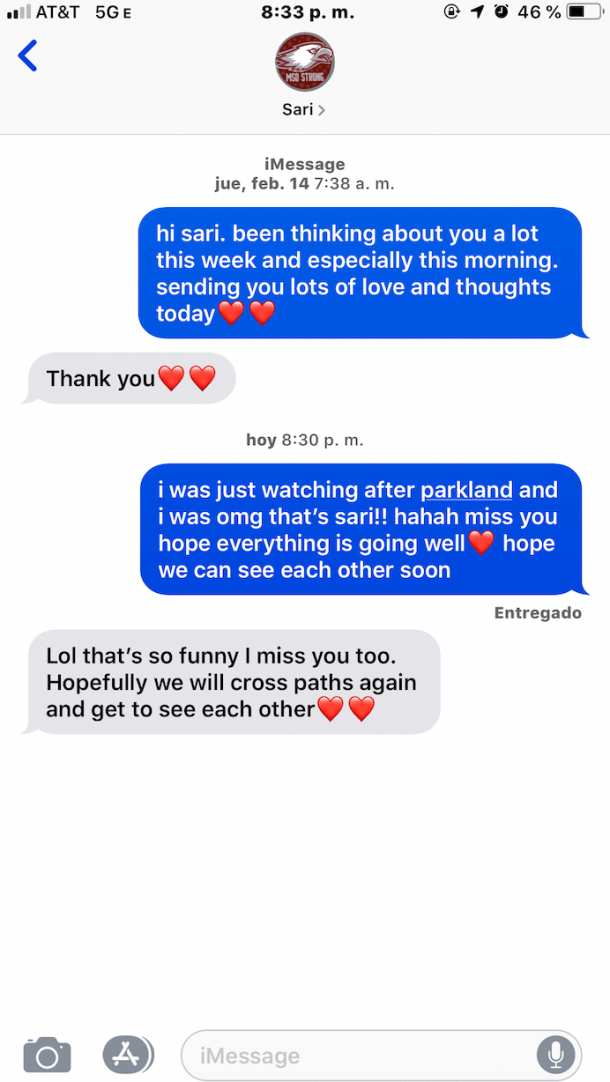
A text conversation between me and my friend Sari who goes to Stoneman Douglas and was in the documentary. The last time I had texted her before the documentary was when it was one year since the shooting.
The world is a messed up, crazy, unsafe place. Tragedies like this should never have to happen, but I’m glad that my generation is willing to make an impactful and safe change to help future generations. I’ve ended a lot of blogs by saying that our generation will change the world, but I am very, VERY sure of it.
 Alison's Adventures